/81/1/172657170666e964ba2c816_2024-logo.png)
Winterising Your Motorhome: Essential Storage and Maintenance Tips for the Cold Season
As the leaves fall and the temperature drops, it's time to think about preparing your motorhome for the winter months ahead.
Whether you're planning to store your vehicle until spring or brave the cold for winter adventures, proper winterisation is crucial for protecting your investment and ensuring trouble-free travels when the warmer weather returns. The UK's damp winters can be particularly harsh on motorhomes, with frost, condensation and moisture creating potential problems that could lead to costly repairs if left unchecked. Taking the time now to winterise your motorhome properly will save you money, prevent damage and ensure you're ready to hit the road as soon as spring arrives.
Key Takeaways
- Proper winterisation prevents costly damage from frost, damp and pests
- Draining water systems completely is essential to avoid burst pipes
- Regular checks throughout winter help catch problems early
- Indoor storage isn't always necessary; proper preparation allows for outdoor storage
- Winter-ready motorhomes can still be enjoyed during the colder months
- A thorough winterisation routine takes about half a day but saves thousands in potential repairs
Why Winterisation Matters
The UK winter brings unique challenges for motorhome owners. Unlike countries with consistently cold, dry winters, our climate fluctuates between freezing temperatures, mild spells and persistent dampness. This combination creates the perfect conditions for problems like condensation build-up, mould growth and freeze-thaw damage.
Water expands by approximately 9% when it freezes, which can split pipes, crack tanks and damage pumps. A single burst pipe could cost hundreds of pounds to repair, not to mention the water damage it might cause. Meanwhile, condensation can lead to mould and mildew, which not only creates unpleasant odours but can also damage soft furnishings and affect your health.
Essential Water System Care
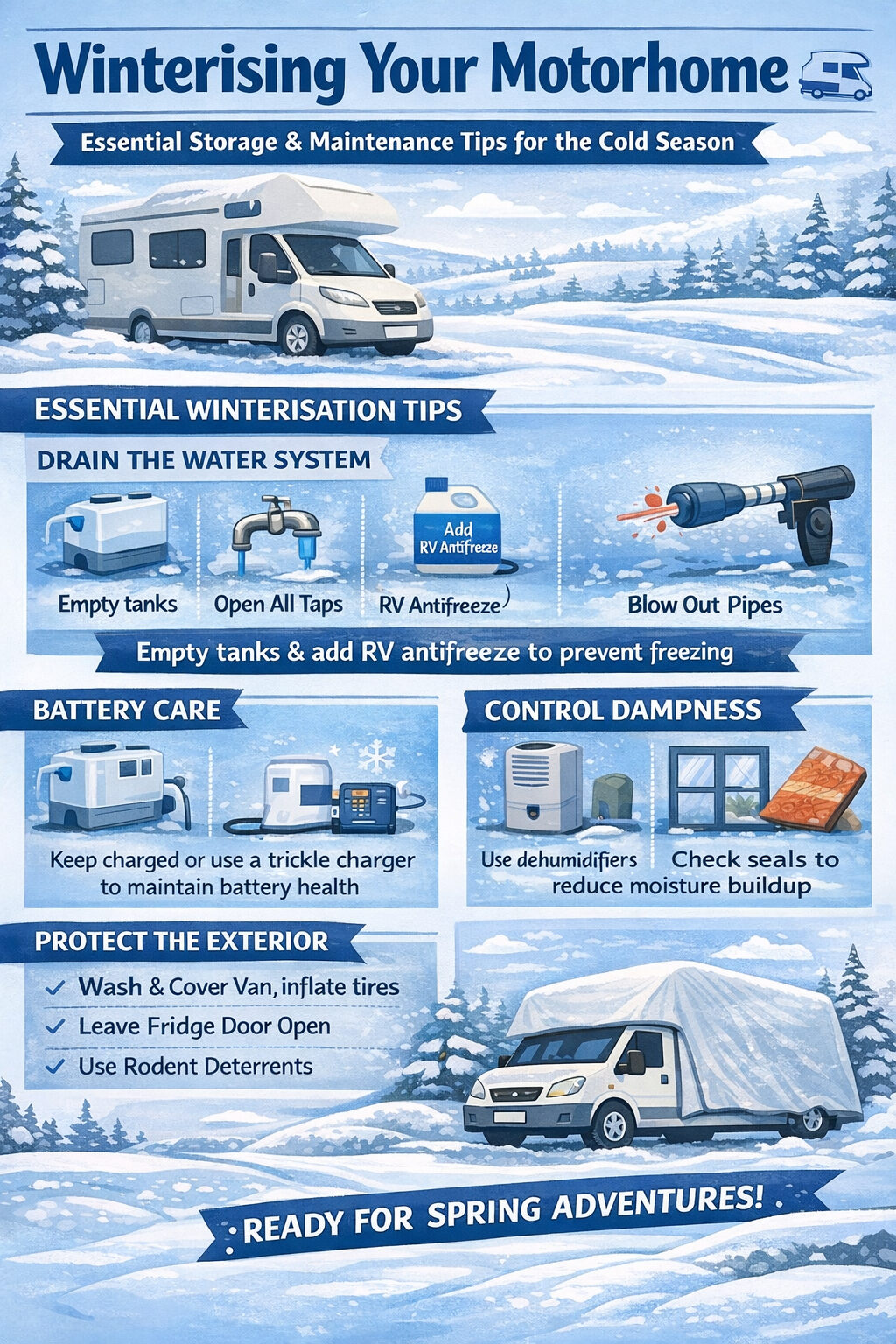
Your motorhome's water system requires the most attention during winterisation. Start by completely draining all water from the freshwater tank, grey water tank and black water tank if fitted. Don't forget the water heater - this often holds several litres that people overlook.
Open all taps, including the shower and pump water through until the system runs dry. Leave taps open to prevent any vacuum lock. For the toilet, flush several times and consider adding antifreeze specifically designed for motorhome systems (never use automotive antifreeze, which is toxic).
Remove and clean water filters, as these can harbour bacteria over winter. If your motorhome has an external shower, ensure this is drained too. Many owners use compressed air to blow through the system, ensuring every drop is removed from the pipes. Water pump manufacturers often recommend running the pump dry for a few seconds to clear residual water, but check your manual first.
Battery Maintenance
Motorhome batteries suffer in cold weather, losing charge more quickly and potentially suffering permanent damage if left to fully discharge. If possible, remove leisure batteries and store them somewhere frost-free, keeping them on a trickle charger or smart charger to maintain optimal charge levels.
If removing batteries isn't practical, ensure they're fully charged before storage and disconnect them to prevent parasitic drain. Solar panels can help maintain charge, but remember that shorter winter days and snow coverage will reduce their effectiveness. Check battery water levels if you have non-sealed batteries, topping up with distilled water as needed.
Protecting Against Damp and Condensation
The UK's damp climate makes moisture control essential. Start with a thorough clean inside and out, as dirt holds moisture against surfaces. Check all window and door seals, replacing any that show signs of wear or damage. A small gap can let in significant moisture over winter.
Place moisture absorbers or dehumidifiers throughout the motorhome, paying particular attention to wardrobes, under-bed storage, and corners where air circulation is poor. Silica gel packs, disposable dehumidifiers, or electric dehumidifiers (if you have power available) all work well. Remember to check and replace these regularly throughout winter.
Leave internal doors and cupboards slightly open to promote air circulation. If storing cushions and mattresses, stand them on edge if possible, or at least turn them monthly to prevent moisture accumulation on the underside.
Exterior Protection
Give your motorhome a thorough wash and wax before storage. The wax layer provides additional protection against the elements. Pay special attention to the roof, checking and resealing any areas where water might penetrate. Clean out gutters and ensure drainage channels are clear.
Check tyre pressures and inflate to the maximum recommended pressure to prevent flat spots developing. If storing for extended periods, consider using tyre savers or moving the vehicle slightly every few weeks. Some owners prefer to jack up the motorhome to take weight off the tyres completely, though this isn't always necessary for typical UK winter storage.
Cover external vents to prevent rain ingress, but ensure you don't block them completely - some ventilation is necessary to prevent condensation. Purpose-made vent covers work well, or create your own using breathable material.
Interior Preparation
Remove all food items, including tinned goods which can burst if they freeze. Clean the fridge and freezer thoroughly, leaving doors propped open to prevent mould growth. The same applies to the oven and microwave.
Vacuum thoroughly, paying attention to areas where crumbs might attract pests. Consider placing humane deterrents like peppermint oil-soaked cotton balls or ultrasonic devices to discourage mice from taking up winter residence.
Remove or wash all bedding and soft furnishings if possible. If leaving them in place, ensure they're completely dry and consider vacuum-packing them to protect against dampness.
Storage Options
Not everyone has access to indoor storage, and the good news is that with proper preparation, outdoor storage is perfectly acceptable for UK winters. If storing outside, consider a breathable motorhome cover, though ensure it's well-fitted to prevent wind damage. Never use a tarpaulin, as these trap moisture and can cause more problems than they solve.
Position your motorhome on level ground if possible, with the front slightly higher than the rear to aid water runoff. If storing on grass, place boards under the tyres to prevent sinking and moisture damage.
Winter Use Tips
If you're planning winter adventures, your motorhome needs different preparation. Ensure your heating system is serviced and working efficiently. Consider adding thermal blinds or secondary glazing to improve insulation. Grade your gas to propane for better cold-weather performance, as butane struggles below 4°C.
Carry winter essentials like snow chains (if travelling to Scotland or Europe), extra antifreeze, and insulation for external water points. Many winter motorhomers swear by skirting around the bottom of their vehicle to prevent cold drafts and protect underbelly components.
Looking for Expert Winterisation Support?
At AMC Motorcaravans, we understand the importance of proper winter care for your motorhome. Our experienced team can provide advice on winterisation, and we stock essential supplies to help protect your investment through the colder months. If you have any questions about preparing your motorhome for winter or need specific products for winterisation, feel free to get in touch with our knowledgeable staff.
FAQs
How long does it take to winterise a motorhome? A thorough winterisation typically takes 3-4 hours, though this varies depending on your motorhome's size and complexity. It's worth taking your time to do it properly.
Can I use my motorhome heating during winter storage? Yes, running heating occasionally helps reduce condensation, but ensure adequate ventilation and check gas levels regularly. Many owners run their heating for a few hours monthly.
Should I start my engine during winter storage? Starting the engine monthly and running it up to temperature helps prevent seals drying out and keeps components lubricated. Take it for a short drive if possible to prevent brake binding.
When should I winterise my motorhome? In the UK, aim to complete winterisation by late October or early November, before the first hard frosts typically arrive.
Is professional winterisation worth it? While many owners successfully winterise their own motorhomes, professional service ensures nothing is missed and often includes checks you might overlook. It's particularly worthwhile for new owners or complex systems.
/81/6/15450461285c178870ef7a4_tsi-approved-code.png)
/81/6/15450461685c178898bddd1_rac.png)
/81/6/15450461965c1788b4c643e_visa.png)
/81/6/15450462125c1788c492904_mastercard.png)
/81/6/15450462315c1788d70bd05_maestro.png)
/81/6/17136200556623c45733ee2_approvedworkshop-badge-2-1-.jpg)