/81/1/172657170666e964ba2c816_2024-logo.png)
Why Regular Motorhome Servicing Matters: A Maintenance Guide
Your motorhome needs regular attention to keep performing reliably
Skipping services might seem like a clever way to save money, but the opposite proves true - regular maintenance prevents costly repairs, preserves value, and most importantly, keeps you safe on the road.
Many motorhome owners, particularly those new to the lifestyle, don't realise that motorhomes need more than just standard vehicle servicing. With two distinct systems - the vehicle mechanics and the habitation area - maintenance requirements exceed those of regular cars. Understanding what needs servicing, when, and why can save you thousands while ensuring every journey remains trouble-free.
Key Takeaways
- Motorhomes need both mechanical servicing and annual habitation checks
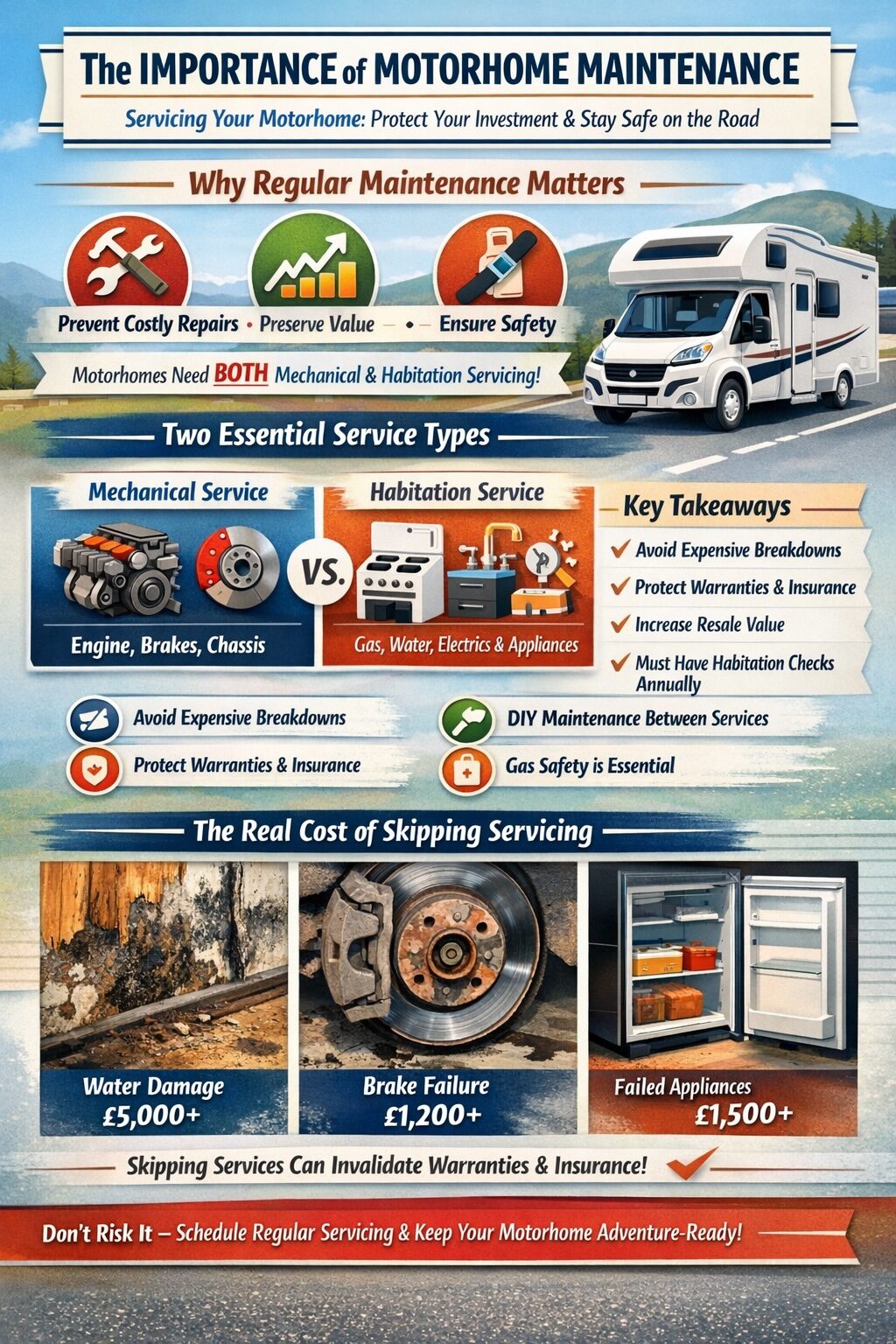
- Regular servicing can prevent breakdowns that cost thousands to repair
- Missing services invalidates warranties and can void insurance
- Habitation service certificates are essential for warranty claims and resale
- Well-serviced motorhomes retain 15-20% more value than neglected ones
- DIY maintenance between services extends component life significantly
- Gas safety checks are legal requirements for rental and could save lives
The Two Types of Essential Servicing
Unlike cars, motorhomes require two distinct service types. Mechanical servicing covers the engine, gearbox, brakes, and chassis - essentially everything that makes your motorhome move. This follows similar schedules to standard vehicles, typically annually or every 10,000-15,000 miles depending on manufacturer recommendations.
Habitation servicing examines the living area components - gas systems, water systems, electrical installations, and appliances. This annual check isn't just about functionality; it's about safety. Gas leaks, electrical faults, and water damage can develop gradually, becoming dangerous or destructive before obvious symptoms appear.
Many owners religiously maintain the mechanical side whilst neglecting habitation servicing, not realising that living area repairs often cost more than engine problems. A failed fridge-freezer can cost £1,500 to replace, whilst undetected water ingress might cause £5,000+ of damage before becoming visible.
The overlap between services catches some owners out too. Leisure batteries, charging systems, and certain safety features need checking during both services. Good service centres coordinate both checks, but if you use different providers, ensure nothing falls through the gaps.
What Happens During Servicing
Mechanical servicing mirrors car maintenance but with motorhome-specific additions. Beyond oil changes and filter replacements, technicians check the additional weight's impact on brakes, suspension, and tyres. Motorhomes work harder than cars - carrying more weight, sitting idle longer, and often tackling challenging terrain.
Habitation servicing is more comprehensive than many expect. Gas systems undergo pressure tests and visual inspections, with regulators and hoses checked for deterioration. Technicians test all appliances for correct operation and ventilation, examining flues and ventilation points that carbon monoxide depends upon for safe dispersal.
Water systems receive thorough attention, checking pumps, taps, and water heaters. More critically, technicians examine seals around windows, doors, and roof fixtures where water ingress typically starts. Catching a failing seal during service costs £50 to fix; missing it could mean replacing an entire wall panel months later.
Electrical systems get comprehensive testing too. Mains hookup safety, 12V systems, battery condition, and charging circuits all need verification. Given that electrical faults cause numerous motorhome fires annually, this testing could literally save your life.
The Real Cost of Skipping Services
The false economy of skipping services becomes apparent when components fail. A seized brake calliper from missed servicing might cost £400 to repair, plus recovery costs if it fails away from home. Worse, the damage to brake discs and potential wheel bearing problems could triple that bill.
Water damage provides the starkest example. A £200 annual habitation service would spot early seal deterioration. Miss several services, and that failed seal lets water destroy wall boards, furniture, and flooring. Repair bills of £5,000-10,000 aren't unusual for extensive water damage, often exceeding insurance coverage due to gradual deterioration clauses.
Warranty implications hurt too. Manufacturers void warranties for missed services, leaving you liable for repairs that should be covered. One owner learned this expensively when their £3,000 fridge failure wasn't covered due to missing one habitation service in year two of ownership.
Insurance companies increasingly scrutinise service history following claims. Prove you've maintained your motorhome properly, and claims process smoothly. Show gaps in servicing, and insurers might reduce settlements or even refuse claims, particularly for mechanical failures or gradual deterioration.
DIY Maintenance Between Services
While professional servicing is essential, your maintenance between services significantly impacts reliability and longevity. Monthly checks take just 30 minutes but catch problems before they escalate.
Start with tyre pressures - motorhomes sitting idle lose pressure, and under-inflation causes dangerous handling and premature wear. Check all fluids monthly, particularly during storage periods when leaks might go unnoticed. Running the engine monthly prevents seals drying and batteries dying, while also circulating fluids that degrade when stagnant.
Inside, operate all systems monthly even when not camping. Run water through all taps, test the toilet flush, and operate windows and skylights. This prevents seals drying out and mechanisms seizing. Fire up the heating, even in summer, ensuring it works when autumn arrives.
Clean and inspect roof seals twice yearly. Use appropriate sealant products for minor deterioration, though major damage needs professional attention. Clear gutters and drainage channels - blocked drains cause more water damage than failed seals.
When to Service Your Motorhome
Timing services correctly maximises benefit whilst minimising inconvenience. Most owners service in spring, preparing for summer adventures. This makes sense but creates booking backlogs and rushed work. Consider autumn servicing instead - centres are quieter, allowing more thorough work, and you'll identify any problems before winter storage.
Mechanical servicing follows mileage or time intervals, whichever comes first. Low-mileage motorhomes still need annual servicing as oil degrades, coolant becomes acidic, and brake fluid absorbs moisture regardless of use. High-mileage users might need servicing twice yearly.
Habitation services are strictly annual for warranty purposes, ideally scheduled just before your camping season. However, if buying used, immediate habitation servicing is wise regardless of claimed history - it establishes a baseline and identifies any hidden problems.
Pre-purchase inspections, whilst not regular servicing, prove invaluable when buying. The £300-500 cost seems steep but pales against buying a motorhome with hidden water damage or mechanical problems.
Finding the Right Service Provider
Not all garages can properly service motorhomes. The weight, height, and dual systems require specific expertise and equipment. Main dealers offer manufacturer expertise but charge premium prices. Independent motorhome specialists often provide better value whilst maintaining quality.
Check credentials carefully. Approved Workshop Scheme membership indicates proper standards and equipment. Gas Safe registration is essential for anyone working on gas systems. Ask about their motorhome experience - a garage primarily servicing cars might miss motorhome-specific issues.
Mobile servicing suits some owners, bringing convenience especially for habitation checks. However, ensure they're properly equipped and certified. Some mobile operators are excellent; others are enthusiastic amateurs. References and certifications matter more than convenience.
Maintaining Your Adventure Investment
Regular servicing might seem expensive and inconvenient, but it's fundamental to safe, reliable motorhoming. Beyond preventing breakdowns and preserving value, proper maintenance ensures your motorhome remains the dependable adventure vehicle you bought. At AMC Motorcaravans, we understand maintenance importance and can recommend trusted service providers in East Sussex. Whether you're buying from us or need advice on maintaining your current motorhome, our team shares expertise gained from years in the industry.
FAQs
How much does motorhome servicing cost? Mechanical servicing typically costs £200-400 depending on vehicle size and requirements. Habitation services run £150-250. Budget £500-650 annually for both services, plus any repairs identified.
Can I service my motorhome myself? Basic maintenance yes, but professional servicing is essential for safety, warranties, and insurance. Gas work legally requires Gas Safe registration, and missed problems could prove costly or dangerous.
What happens if I miss a service? Warranties become void, insurance might be compromised, and problems develop undetected. If you've missed services, book immediately and be honest - technicians need to know to check more thoroughly.
Do I need servicing if I barely use my motorhome? Absolutely. Inactive motorhomes deteriorate faster than regularly used ones. Seals dry out, fluids degrade, and pests cause damage. Annual servicing becomes even more critical for occasionally used vehicles.
How do I prove service history? Keep all invoices, stamps in service books, and certificates (especially habitation service certificates). Digital records help too. When selling, complete service history adds thousands to your motorhome's value.
/81/6/15450461285c178870ef7a4_tsi-approved-code.png)
/81/6/15450461685c178898bddd1_rac.png)
/81/6/15450461965c1788b4c643e_visa.png)
/81/6/15450462125c1788c492904_mastercard.png)
/81/6/15450462315c1788d70bd05_maestro.png)
/81/6/17136200556623c45733ee2_approvedworkshop-badge-2-1-.jpg)