/81/1/172657170666e964ba2c816_2024-logo.png)
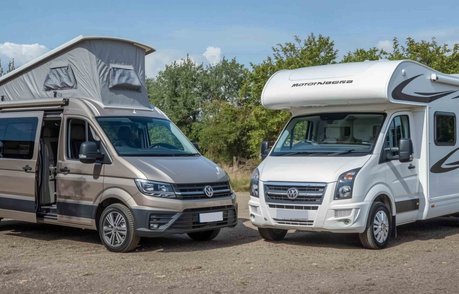
What's the Difference Between a Campervan and a Motorhome?
We Help You Understand the Difference Between the Two
Yet speak to enthusiasts, and they'll insist there are clear distinctions between the two. So what's the truth? Understanding the genuine differences can help you make better decisions about which type of vehicle suits your adventures. The confusion isn't helped by regional variations, marketing terminology, and the fact that the lines between categories have blurred as manufacturers create increasingly innovative designs.
Whether you call it a campervan, motorhome, recreational vehicle, or even a camping car, what matters most is finding the right vehicle for your needs. However, knowing the traditional distinctions helps when searching for vehicles, comparing insurance quotes, and communicating with dealers.
Key Takeaways
- Campervans are typically converted vans retaining their original body shape
- Motorhomes are purpose-built or heavily modified with constructed living spaces
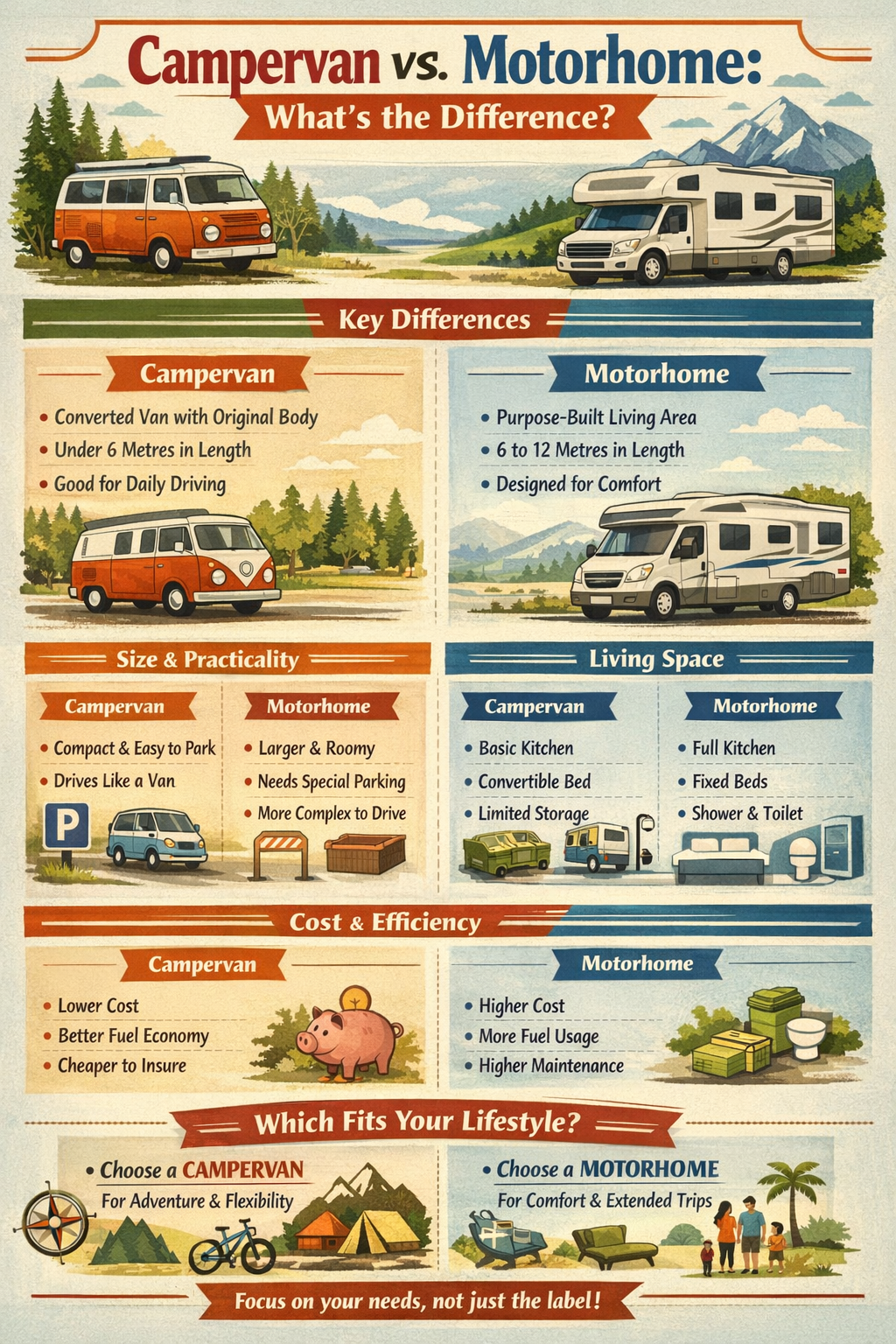
- Campervans generally measure under 6 metres; motorhomes range from 6-12 metres
- Insurance and tax classifications may differ between the two categories
- Campervans work better as daily drivers; motorhomes offer superior living comfort
- The terminology often overlaps - focus on features rather than labels
- Both require different driving considerations compared to standard cars
Traditional Definitions
Historically, a campervan refers to a standard van that's been converted for camping use whilst maintaining its original exterior shape. Think of the classic VW Type 2 or modern conversions based on Ford Transits, Mercedes Sprinters, or Volkswagen Transporters. The van's metal shell remains intact, with the conversion happening internally - adding beds, cooking facilities, and storage without altering the fundamental vehicle structure.
Motorhomes, by contrast, involve purpose-built or heavily modified vehicles where the living space is constructed rather than converted. This includes coach-builts where a living module is built onto a chassis cab, A-Class motorhomes built from the ground up as recreational vehicles, and integrated motorhomes where the cab and living area flow seamlessly together.
The distinction seems clear enough, but modern manufacturing has muddied these waters considerably. Today's high-top campervans with pop-up roofs offer standing room and facilities rivalling smaller motorhomes. Meanwhile, compact motorhomes based on van chassis share more DNA with campervans than traditional motorhomes. The result? The terminology has become more about convention than strict classification.
Size and Practicality Differences
Size remains the most practical distinction between campervans and motorhomes. Campervans typically measure between 4.5 and 6 metres long, fitting standard parking spaces and maintaining everyday usability. Most campervans handle multi-storey car parks, supermarket runs, and width restrictions without drama. This versatility makes them genuine alternatives to cars for many owners.
Motorhomes start around 6 metres and extend beyond 12 metres for luxury models. This extra length transforms living comfort but limits everyday practicality. Forget standard parking spaces - you'll need two bays or designated motorhome parking. Height barriers, width restrictions, and weight limits become constant considerations. That quick shop becomes a carefully planned operation.
The driving experience differs markedly too. Campervans drive essentially like large vans - familiar, predictable, and manageable for most confident drivers. Motorhomes demand more adjustment, particularly coach-builts with their higher centres of gravity, wind susceptibility, and different weight distribution. Reversing a 7-metre motorhome with rear overhang requires different skills than backing a campervan.
Consider your comfort zone honestly. If parallel parking makes you nervous in a car, managing a large motorhome might prove stressful. Conversely, if you're comfortable driving vans or have towing experience, the transition to motorhome driving comes more naturally.
Living Space and Comfort
Where motorhomes excel is internal living space. Fixed beds, separate shower rooms, proper kitchens with ovens, and distinct living areas create home-like comfort impossible in most campervans. Standing room throughout, rather than just in certain spots, reduces the crouching and shuffling that characterises campervan life.
Storage in motorhomes is generally superior too. Dedicated wardrobes, overhead lockers throughout, and garage spaces for bikes or outdoor equipment make extended travel more comfortable. Campervans require creative packing, with every item having its specific place and multi-functional furniture the norm.
However, campervans offer their own comfort advantages. The compact space heats quickly and feels cosy rather than cavernous. Everything sits within arm's reach, making middle-of-the-night bathroom trips less disruptive. Many campervan owners appreciate the simplicity - less space means less cleaning, fewer systems to maintain, and enforced minimalism that many find liberating.
Weather resilience varies too. Motorhomes handle extended bad weather better, with space to spread out and proper heating systems. Campervans can feel claustrophobic when rain traps you inside for days, though their go-anywhere ability means you can more easily drive somewhere sunny.
Cost Implications
Purchase prices overlap considerably, but general trends exist. Entry-level campervans start around £30,000 new, with professional conversions on premium vans reaching £80,000+. Used campervans hold value remarkably well, particularly quality conversions and recognised brands like VW California.
New motorhomes typically start around £45,000, climbing rapidly with size and specifications. Depreciation hits motorhomes harder initially, making nearly-new models attractive propositions. A three-year-old motorhome might cost 40% less than new, whilst an equivalent campervan might retain 70% of its value.
Running costs favour campervans decisively. Fuel economy of 30-35mpg is achievable, compared to 20-25mpg for motorhomes. Insurance costs less, road tax might be lower (depending on classification), and servicing mirrors standard van maintenance. Storage often proves unnecessary with campervans fitting on driveways, saving £50-100 monthly.
However, the comfort equation matters. If a motorhome enables longer trips and reduces accommodation costs, the higher running expenses might balance out. Equally, if a campervan's limitations mean you book hotels regularly, its economy advantages disappear.
Legal and Classification Quirks
UK regulations create interesting distinctions between campervans and motorhomes, though not always logically. DVLA classification depends on conversion extent rather than vehicle type. A professionally converted campervan might be classified as a 'motor caravan', whilst a basic motorhome could remain classified as a 'van with windows'.
These classifications affect more than semantics. Motor caravan classification can mean cheaper insurance, different speed limits (matching cars rather than commercial vehicles), and potential MOT frequency changes. However, recent DVLA changes have made motor caravan classification harder to achieve, particularly for campervans.
Some campsites, particularly in Europe, distinguish between campervans and motorhomes for pitching fees. Ferries might charge differently based on vehicle height or length rather than type. Even UK parking restrictions sometimes specify 'no motorhomes' whilst permitting campervans, though enforcement interpretation varies wildly.
Which Suits Your Lifestyle?
Choose a campervan if you want one vehicle for everything - commuting, holidays, and weekend adventures. They suit spontaneous travelers who favour flexibility over comfort, couples or solo adventurers rather than families, and anyone lacking storage space for a dedicated leisure vehicle.
Campervans excel for active holidays where the vehicle provides sleeping accommodation whilst you spend days hiking, biking, or exploring. Their discretion enables overnight parking where motorhomes might attract attention, and their agility opens up remote locations larger vehicles can't access.
Opt for a motorhome if comfort trumps versatility. They suit families needing space and privacy, retirees planning extended travels, and anyone who views their vehicle as accommodation rather than transport. If you'll spend considerable time inside rather than just sleeping, motorhomes make more sense.
Bad weather, health considerations, or mobility challenges might make motorhome comfort essential rather than desirable. The ability to move between bed, bathroom, and living areas without stepping outside becomes invaluable for some users.
Finding Your Perfect Match
At AMC Motorcaravans, we stock both campervans and motorhomes, understanding that the label matters less than finding what works for you. Our team helps you look beyond terminology to focus on practical requirements, lifestyle compatibility, and budget realities. Whether you're drawn to nimble campervans or comfortable motorhomes, we'll help you understand the implications of each choice and find your ideal adventure vehicle.
FAQs
Can I drive a motorhome on a car licence? Yes, if you passed your test before January 1997, you can drive vehicles up to 7.5 tonnes. Newer licence holders are restricted to 3.5 tonnes, covering most campervans and many motorhomes, though larger models require C1 licence upgrade.
Which is better for wild camping? Campervans generally suit wild camping better due to their discretion and ability to access remote spots. However, motorhomes with good off-grid capabilities (solar, large water tanks) work well for established wild camping areas.
Do campervans need special insurance? Yes, standard van insurance won't cover converted campervans. You'll need specific campervan insurance covering the conversion value and camping equipment. Costs vary based on conversion quality, security, and storage location.
Which holds value better? Quality campervans typically depreciate slower than motorhomes, particularly recognised conversions and VW Californias. However, individual condition, maintenance history, and market demand matter more than vehicle type.
Can I convert a van into a campervan myself? Yes, but consider implications carefully. DIY conversions rarely achieve motor caravan classification, might not be insurable, and typically have poor resale value. Professional conversions, whilst expensive, offer better long-term value and usability.
/81/6/15450461285c178870ef7a4_tsi-approved-code.png)
/81/6/15450461685c178898bddd1_rac.png)
/81/6/15450461965c1788b4c643e_visa.png)
/81/6/15450462125c1788c492904_mastercard.png)
/81/6/15450462315c1788d70bd05_maestro.png)
/81/6/17136200556623c45733ee2_approvedworkshop-badge-2-1-.jpg)