/81/1/172657170666e964ba2c816_2024-logo.png)
First-Time Buyer's Guide: Choosing Your Motorhome Based on Your Camping Style
Step Into Motorhome Ownership With Confidence
Your camping style should drive every decision, from the size and layout to the features you prioritise. The couple planning weekend escapes to the countryside needs something entirely different from the family embarking on month-long European adventures. Understanding your camping style before you start viewing motorhomes will save you time, money, and potential disappointment down the road.
Key Takeaways
- Define your camping style before setting your budget - weekend escapes, extended touring, or full-time living require different vehicles
- Fixed beds save time but reduce living space; consider your daily routine carefully
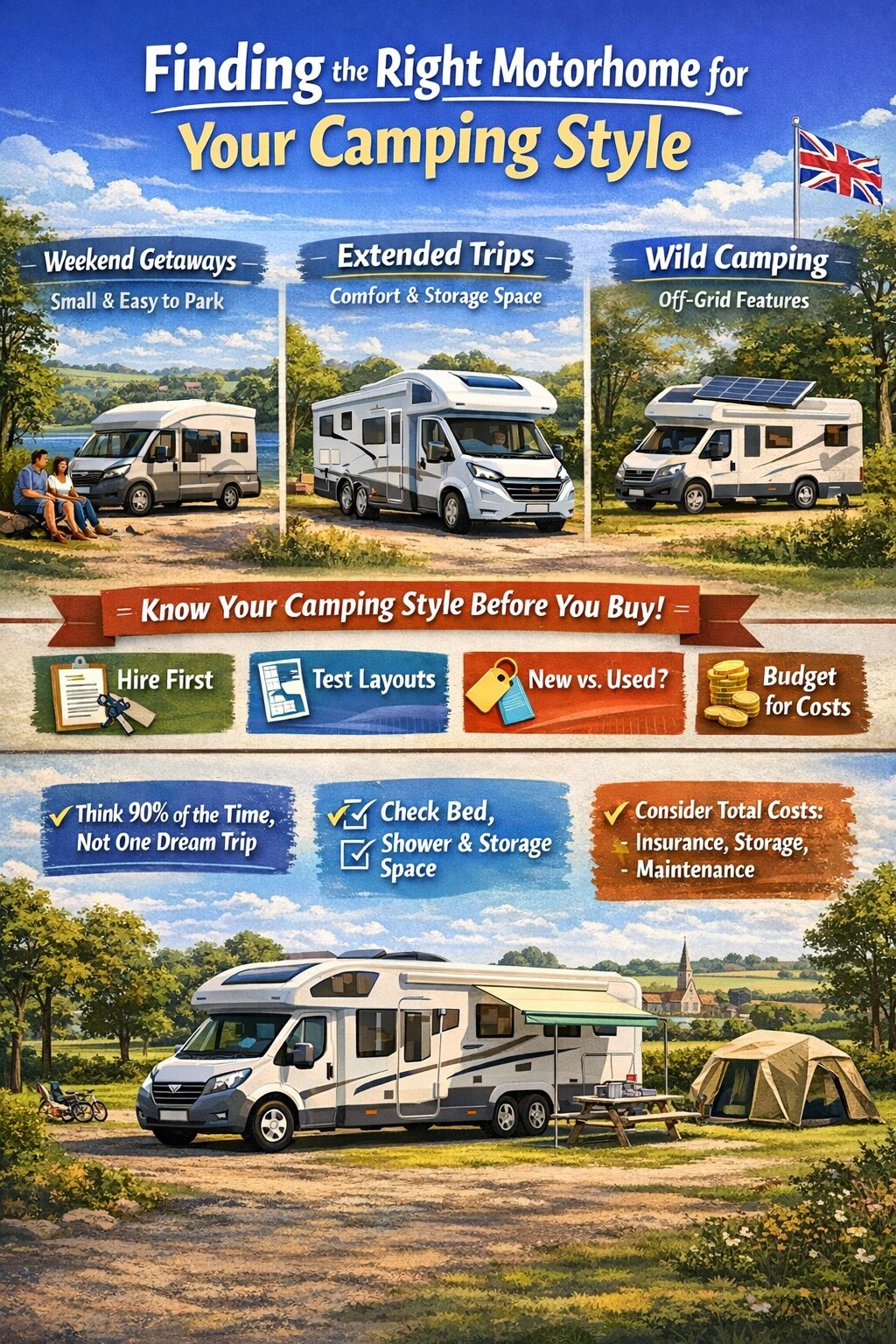
- Don't buy based on one dream trip - choose for how you'll use it 90% of the time
- Hirers make excellent first-time buyers as they've already tested the lifestyle
- New isn't always better - quality used motorhomes offer better value and proven reliability
- Consider the total cost including insurance, storage, and maintenance, not just the purchase price
- Test everything during viewings - from bed comfort to shower space
Understanding Your Camping Style
Before browsing motorhomes, spend time honestly assessing how you'll camp. Are you dreaming of weekend breaks to local beauty spots, or planning to explore Europe for months at a time? Will you stick to campsites with facilities, or venture off-grid into wild camping spots? These fundamental questions shape everything from size requirements to essential features.
Weekend warriors typically favour smaller, more manoeuvrable motorhomes that double as second cars. If you're escaping Friday evening and returning Sunday night, setup time matters more than living space. A compact van conversion with a pop-top roof might be perfect - easy to park, economical to run, and quick to prepare for sleeping.
Extended tourers need more careful consideration of comfort and storage. Three weeks exploring Scotland demands proper wardrobe space, a comfortable lounge area, and perhaps a fixed bed you don't need to remake daily. You'll appreciate a separate shower, decent kitchen facilities, and enough payload capacity for everything you'll need.
Wild camping enthusiasts should prioritise self-sufficiency. Larger water tanks, solar panels, and refillable gas systems become essential rather than nice-to-haves. A more compact motorhome might actually suit better, as many of the UK's most beautiful wild camping spots have narrow access roads and small parking areas.
Layout Considerations for Different Styles
The layout that looks perfect in the showroom might prove frustrating in real use. Consider your daily routine: are you happy converting the lounge into a bed nightly, or would a fixed bed save arguments and backache? French beds (fixed beds with access from one side) work well for couples who don't mind climbing over each other, whilst island beds need more length but offer easier access.
Families face particular challenges. Bunk beds keep children happy with their own space but check weight limits - many are unsuitable for teenagers. Dinette layouts that convert to beds work well for younger children but consider where everyone sits during bad weather. Some families swear by awnings for extra living space, though this limits spontaneous overnight stops.
The bathroom debate divides motorhomers. Compact washrooms with combined toilet and shower save space but mean everything gets wet when showering. Separate shower cubicles add comfort but reduce living space. If you'll mainly use campsite facilities, a basic washroom might suffice. Planning wild camping adventures? That proper shower becomes much more appealing.
Kitchen requirements vary enormously too. Weekend couples might manage with two gas rings and a small fridge, whilst families cooking three meals daily need proper workspace, oven facilities, and substantial food storage. Be realistic - if you eat out frequently at home, you probably won't become a masterchef on holiday.
New vs Used: A First-Timer's Dilemma
The appeal of a pristine new motorhome is undeniable - latest features, full warranty, and that new vehicle smell. However, experienced motorhomers often recommend starting with used, particularly for first-timers still discovering their preferences.
Motorhomes depreciate significantly in their first three years, making nearly-new models exceptional value. A three-year-old motorhome might cost 30% less than new whilst offering identical functionality. You'll also benefit from any issues being resolved under warranty and previous owners often add valuable extras like solar panels or bike racks.
Used motorhomes reveal their quirks quickly. That irritating rattle or problematic layout becomes apparent, whilst new motorhome problems might only surface after the honeymoon period. Previous owners can provide invaluable insights about real-world fuel consumption, storage limitations, and comfort levels.
Consider ex-hire motorhomes too. Whilst they've seen heavy use, hire companies maintain them meticulously and they're often newer models with desirable layouts. The interior might show wear, but mechanically they're usually sound, and prices reflect the cosmetic imperfections.
Budget Reality Check
First-time buyers often fixate on purchase price, forgetting the significant running costs. Insurance for new motorhomers can be surprisingly expensive, particularly for larger vehicles. Budget £800-1500 annually, though shopping around and joining motorhome clubs can reduce this.
Storage costs catch many off-guard. Unless you have suitable home storage, budget £40-100 monthly for secure facilities. Maintenance, servicing, and habitation checks add several hundred pounds annually, whilst road tax, MOT, and breakdown cover mirror car ownership costs.
Don't forget the extras that make motorhoming enjoyable. Levelling ramps, electrical hookup cables, water containers, and outdoor furniture quickly add up. Many first-timers spend another £1000-2000 kitting out their motorhome. Buying used often includes these extras, adding hidden value.
Set aside contingency funds too. Even reliable motorhomes need occasional repairs, and motorhome parts cost more than car equivalents. A failed fridge or water pump can cost several hundred pounds to replace.
Common First-Timer Mistakes
The biggest mistake is buying for the dream, not the reality. That eight-berth giant seems perfect for the extended family holiday, but if you'll mostly travel as a couple, you're paying to transport empty space. Choose for your typical use, not the exceptional trip.
Overlooking payload capacity causes major frustration. Every motorhome has a maximum weight limit, and the difference between empty and maximum weight is your payload. This must cover passengers, water, gas, food, clothes, and equipment. Many motorhomes, particularly coach-builts with luxurious features, have surprisingly limited payload.
Skipping proper test drives costs dearly later. Insist on a meaningful test drive including motorways, narrow roads, and reversing. Check blind spots, wind noise, and whether you're comfortable with the driving position. If possible, hire a similar model for a weekend before purchasing.
Emotional buying leads to poor decisions. That gleaming motorhome might look perfect, but does the layout work for your needs? Can you genuinely afford the running costs? Take someone objective to viewings, and never feel pressured to decide immediately.
Making Your Decision
Start by hiring different motorhome types. A weekend in a compact van conversion followed by a week in a family coach-built teaches you more than hours of research. Many dealers offer try-before-you-buy schemes, deducting hire costs from eventual purchases.
Join online communities and motorhome clubs before buying. Members offer invaluable advice about specific models, common problems, and realistic running costs. Facebook groups for particular manufacturers reveal real-world experiences you won't find in reviews.
When viewing, test everything methodically. Lie on the bed properly - is it genuinely comfortable? Stand in the shower - can you move adequately? Sit at the dinette - is there proper legroom? Open all cupboards and imagine living with that storage. These practical checks matter more than glossy surfaces.
Consider your future too. Whilst predicting life changes is impossible, think about the next five years. Approaching retirement might mean longer trips become possible. Growing teenagers might need more space soon. Buy with tomorrow in mind, not just today.
Ready to Start Your Motorhome Journey?
At AMC Motorcaravans, we specialise in helping first-time buyers find their perfect motorhome. Our experienced team understands the overwhelming choice facing newcomers and provides honest, practical advice based on your camping style and budget. With our selection of quality used motorhomes, transparent pricing, and comprehensive handovers, we make your first motorhome purchase as smooth as possible. Visit us to discuss your requirements and explore options suited to your camping dreams.
FAQs
What's the best motorhome for a first-time buyer? There's no universal answer, but compact van conversions or small coach-builts around 6-7 metres work well for most beginners. They're manageable to drive, economical to run, and sufficient for comfortable camping without overwhelming complexity.
Should I buy from a dealer or privately? Dealers offer warranties, professional preparation, and legal protection, making them safer for first-timers. Private sales can offer savings but require mechanical knowledge and carry more risk.
How old is too old for a first motorhome? Age matters less than condition and maintenance history. Well-maintained 10-year-old motorhomes can be more reliable than neglected three-year-old ones. Focus on service history, habitation check records, and overall condition rather than age alone.
Can I finance a motorhome purchase? Yes, various finance options exist including hire purchase and personal loans. Remember that interest adds significantly to total cost. Consider whether investing savings might be wiser than paying finance charges.
What should I check during a viewing? Beyond mechanical basics, check for damp (musty smells, soft walls, staining), test all appliances, examine tyres for age and wear, verify documentation, and ensure everything works including heating, water systems, and electrical components.
/81/6/15450461285c178870ef7a4_tsi-approved-code.png)
/81/6/15450461685c178898bddd1_rac.png)
/81/6/15450461965c1788b4c643e_visa.png)
/81/6/15450462125c1788c492904_mastercard.png)
/81/6/15450462315c1788d70bd05_maestro.png)
/81/6/17136200556623c45733ee2_approvedworkshop-badge-2-1-.jpg)